
Programs & Pipeline
Radiation-Induced Xerostomia (RIX)
Xerostomia (dry mouth) is a condition in which a person’s salivary glands do not produce enough saliva. Symptoms include difficulty eating, chewing, and speaking, oral pain, sore throat, difficulty sleeping, inability to exercise, uncontrollable dental caries (tooth decay), yeast infections, oral burning and inability to wear dentures.

Xerostomia has a number of different potential causes but may result from radiation therapy for head and neck cancer or be caused by certain autoimmune diseases such as Sjogren’s disease. Currently, there are no effective treatments for people with moderate or severe xerostomia.
Our Approach:
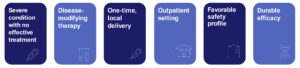
We are developing AAV-hAQP1 to treat radiation-induced xerostomia (RIX). AAV-hAQP1 is an investigational genetic medicine that is designed to increase water conduction in salivary glands that have been damaged by radiation therapy.
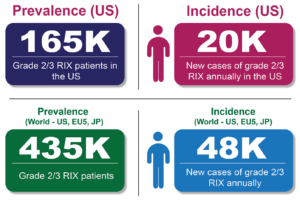
Worldwide, approximately 660,000 new cases of head and neck cancer are diagnosed each year. Persistent RIX three or more years post radiation treatment is a severe, lifelong disorder with no effective treatment. There are currently around 435,000 patients globally suffering from persistent grade 2/3 RIX with approximately 48,000 new cases diagnosed each year, with 165,000 current patients and 20,000 new cases in the US.
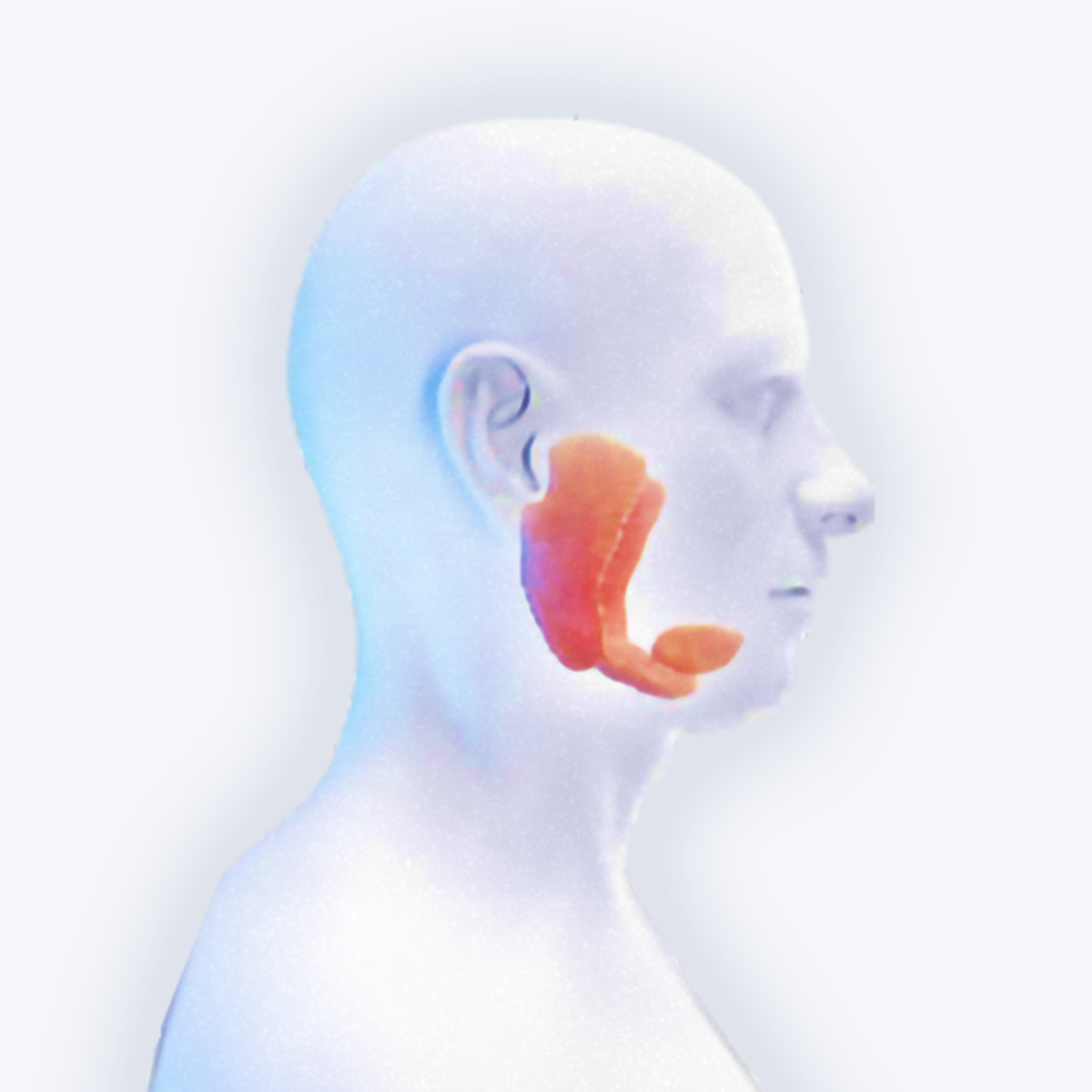
AAV-hAQP1 introduces a water conducting channel into the damaged glands. We are currently conducting a Phase 2, potentially pivotal study for people with moderate or severe dry mouth (xerostomia) caused by radiation therapy for head and neck cancer, the AQUAx2 Study.
AAV-hAQP1 may be appropriate for treatment of xerostomia resulting from other conditions, such as Sjogren’s Syndrome or PSMA radioligand therapy.
To learn more about the promising results from MeiraGTx’s Xerostomia AAV-hAQP1 trials to date, please see our recent presentation of 3-year data from the Phase 1 AQUAx study on April 16, 2026 here.
MeiraGTx has been granted both Breakthrough Therapy Designation (BTD) and Regenerative Medicine Advanced Therapy (RMAT) Designation from the FDA for AAV2-hAQP1 for the Treatment of Grade 2/3 Radiation-Induced Xerostomia.
- Breakthrough Therapy designation is a process designed to expedite the development and review of drugs that are intended to treat a serious condition and preliminary clinical evidence indicates that the drug may demonstrate substantial improvement over available therapy on a clinically significant endpoint(s)
- RMAT designation recognizes the preliminary clinical evidence of the potential benefit of AAV2-hAQP1 as a one-time treatment for this debilitating condition
- RMAT designation includes the benefits of the Fast Track and Breakthrough Therapy designations, allows frequent regulatory interactions with the FDA, and potential routes to accelerated approval and Priority Review